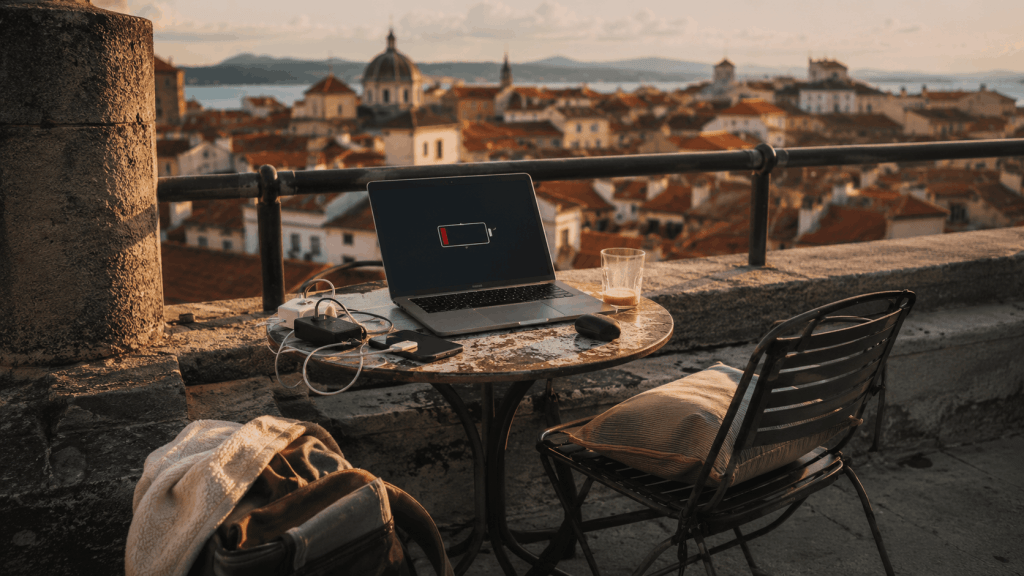
You know the photo. Laptop open on a beach, a coconut sweating beside it, turquoise water in the background, the implication being that this person has cracked the code and you, sitting at your desk, have not.
I want to gently take that photo apart, because I think it’s done real damage — not to the people who fall for it, exactly, but to the way a whole generation thinks about freedom.
Working from anywhere is a logistics fact. It’s a genuinely nice one. But it is not freedom, and confusing the two leads people to chase the wrong thing for years, optimizing their location while their actual freedom stays exactly where it was, or gets worse.
What the photo doesn’t show
The beach photo crops tightly for a reason. Just outside the frame is usually the truth.
The wifi is bad and the person is quietly stressed about a call. The “office” is uncomfortable after twenty minutes and their back hurts. The work didn’t get easier because the view got better — they’re answering the same anxious emails, just with sand in their laptop and a worse chair. Most of all: the business behind them is held together entirely by their own constant attention, which means they’ve achieved the remarkable feat of being on call from paradise.
That’s the part nobody photographs. You can move your body to the most beautiful place on earth and bring the entire weight of an un-systematized business with you, in your chest, where it always was. The location changed. The trap didn’t.
I’ve met people living the supposed dream who were more anxious, more reactive, and less free than colleagues with a fixed desk and a fixed routine — because the colleague had built something that ran, and the nomad had built something that only ran while they personally pushed it, from wherever they happened to be standing.
Two kinds of freedom, and we keep buying the wrong one
It helps to split the word in two.
There’s geographic freedom — the ability to do your work from different places. This is real and it’s lovely and modern tools have made it genuinely accessible. I’m not knocking it. I use it.
Then there’s structural freedom — the ability to step away from the work without everything falling apart. To get sick for a week, or take a month off, or simply close the laptop on a Friday and not think about it, because the business doesn’t require your continuous presence to survive.
The nomad fantasy sells the first and stays very quiet about the second. But the second is the one that actually determines whether you’re free. Geographic freedom without structural freedom is just a better backdrop for your cage. Structural freedom without ever leaving your hometown is, by almost any honest measure, the freer life.
The cruel part is that geographic freedom is the easy one to fake and the easy one to photograph, so it’s the one everyone chases. Structural freedom is invisible, unglamorous, and built slowly out of systems. Nobody posts a photo of a well-documented process or an automation that quietly handles a whole category of work. But that’s where the freedom actually lives.
Freedom is built from four boring things
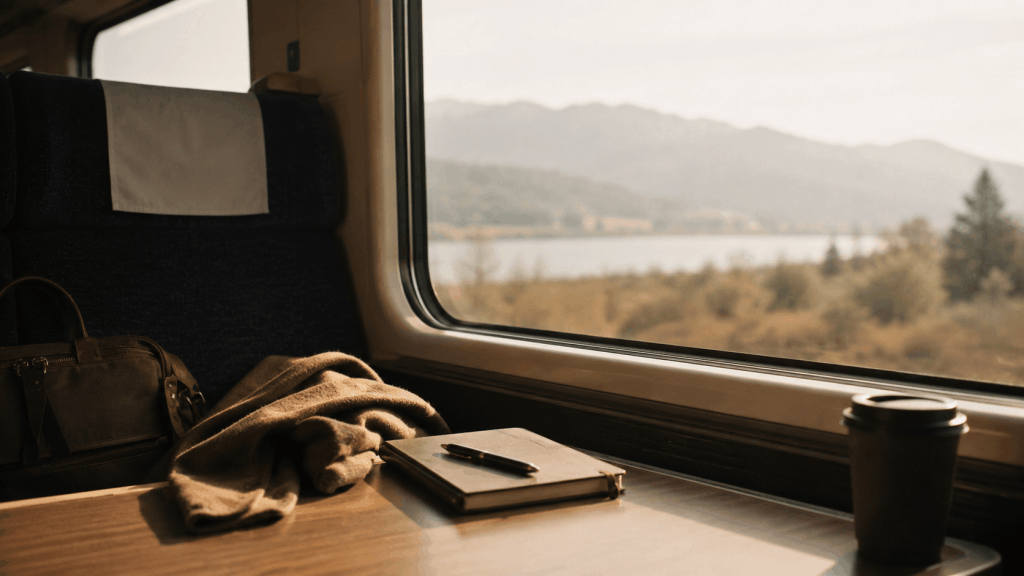
If real freedom isn’t the beach, what is it made of? In my experience, four things, none of them photogenic.
Systems. A business that runs on documented processes and good automation, rather than on your memory and your panic, can let you go. This is the foundation. Everything else sits on top of it. Without it, every other kind of freedom is borrowed and will be repossessed the moment something breaks.
Clarity. Knowing what you actually want and what the work is for. Most overwork isn’t imposed from outside — it comes from internal confusion, from not knowing what’s enough, so you do everything just in case. Clarity is what lets you stop. Without it, even a four-hour workday fills with anxious busywork.
Sustainability. A pace and a model you could maintain for years without breaking. Freedom that costs you your health or your relationships isn’t freedom; it’s a high-interest loan against your future. The nomad who burns bright for two years and crashes wasn’t free. They were sprinting in a nicer outfit.
Knowing the life you’re building. This is the quiet one underneath the others. Freedom isn’t an escape from something — from the office, from the boss, from the commute. That’s just the first move, and it’s the easy one. Real freedom is freedom toward something: a specific life you’ve actually decided you want. Escape without a destination just lands you on a beach, anxious, with a coconut, wondering why you still feel the same.
The question that actually matters
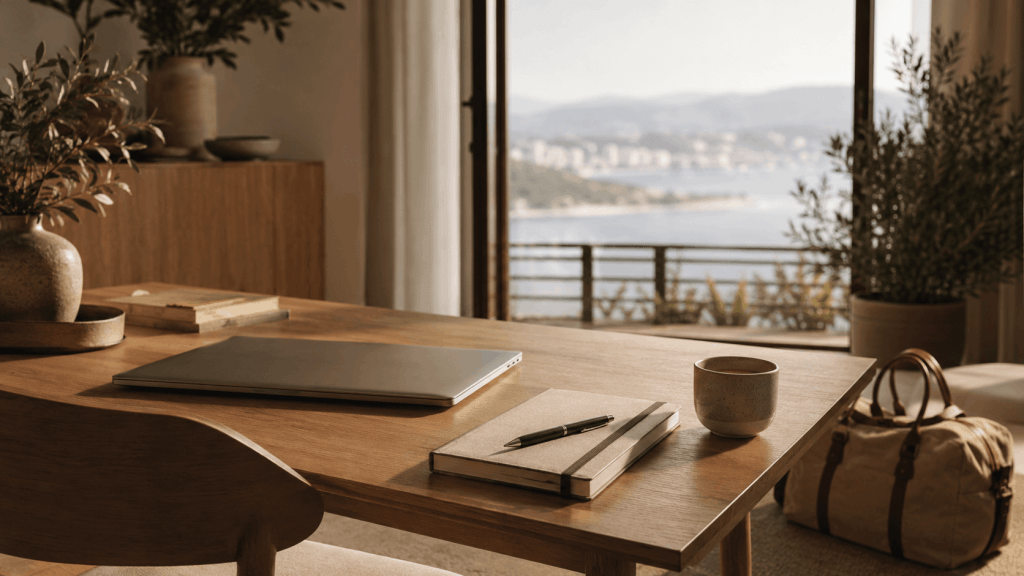
So here’s the question I’d put in place of “where can I work from?”
What kind of life is this work actually building?
Not where you do it. Not how it looks on a feed. What it’s for. Because you can answer the location question perfectly — a different country every month, the whole world as your office — and still be building a life you never chose, just in increasingly beautiful settings.
The people I’ve watched get genuinely free didn’t optimize for location first. They optimized for structure. They built the systems, got clear on what they wanted, set a pace they could keep, and decided on the life. And then — almost as a side effect — they found they could do it from anywhere, including, sometimes, the beach. The beach came at the end, as a consequence of freedom, not as a substitute for it.
That’s the inversion the myth gets backwards. The nomad fantasy says: change your location and freedom follows. The truth runs the other way. Build the freedom, and location becomes a detail you get to choose.
The takeaway
The dream isn’t wrong because beaches and travel are bad. It’s wrong because it points at the visible, photographable thing — the where — and quietly skips the invisible, structural thing that actually determines whether you’re free.
You don’t need a plane ticket to start. You need systems that can run without you, clarity about what’s enough, a pace you could hold for a decade, and an honest answer to what all of this is for. Get those, and you’re free wherever you are. Skip them, and you’ll be just as trapped in paradise as you were at your desk — only now with worse wifi and a better view of a life you still haven’t chosen.


Rispondi