

There’s a particular feeling that hits a digital worker in Morocco somewhere around the third day. You sit down to do something efficiently — order, pay, get an answer, leave — and the place gently declines to cooperate at your pace. The tea comes when it comes. The conversation happens before the transaction. Nobody seems to feel the clock the way you do.
The first reaction is mild panic. The second, if you stay long enough to get there, is something closer to relief.
I’m writing this from a country that doesn’t reward hurry, and I keep noticing how much of what I’d been calling productivity was just hurry wearing better branding. I don’t want to romanticize a whole culture into a productivity hack — that’s its own kind of disrespect. But there are things slowness makes visible that speed keeps hidden, and a place where slowness is normal is a good place to see them.
Slowness is not laziness, and we’ve confused the two
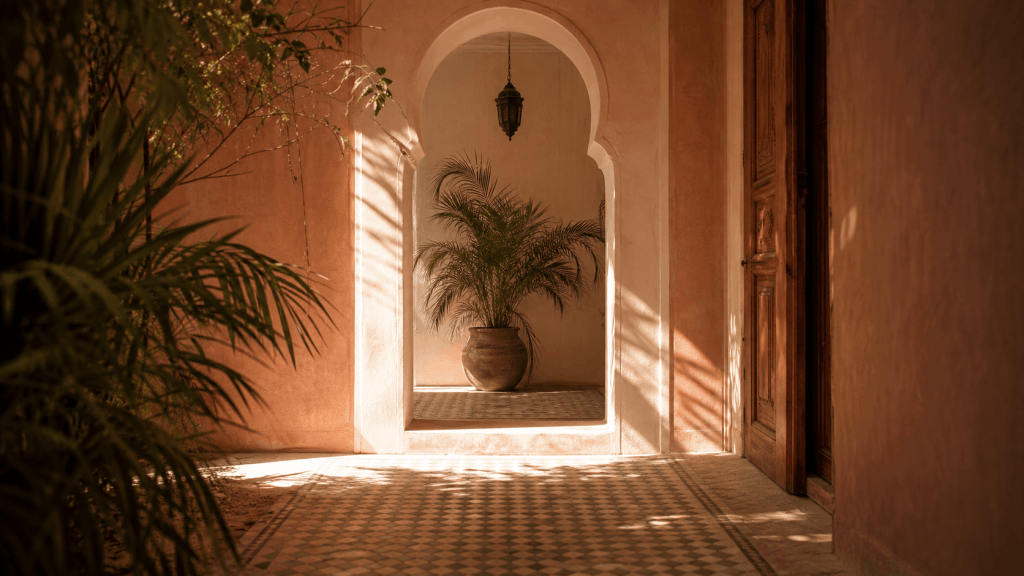
Back home, slow has a moral weight to it. Slow is what you apologize for. Slow is the thing the fast people overtake. We’ve fused “slow” and “lazy” so completely that doing one thing carefully feels almost irresponsible when you could be doing five things at once.
Morocco doesn’t carry that fusion. Slowness here isn’t the absence of work — there’s plenty of work, and a lot of it is hard. It’s the absence of frenzy. Things take the time they take. A meal is a meal, not fuel consumed over a keyboard. A conversation isn’t an interruption of the real work; quite often it is the real work, or at least the soil the work grows in.
For someone who builds digital things, this is a quietly radical reframe. Most of my “slow” guilt, I realized, wasn’t about output at all. It was about appearances — the performance of being maximally busy, mostly for myself. Strip out the performance and a slower pace doesn’t cost you nearly as much real output as you’d fear. It mostly costs you the theater.
Event-time versus clock-time
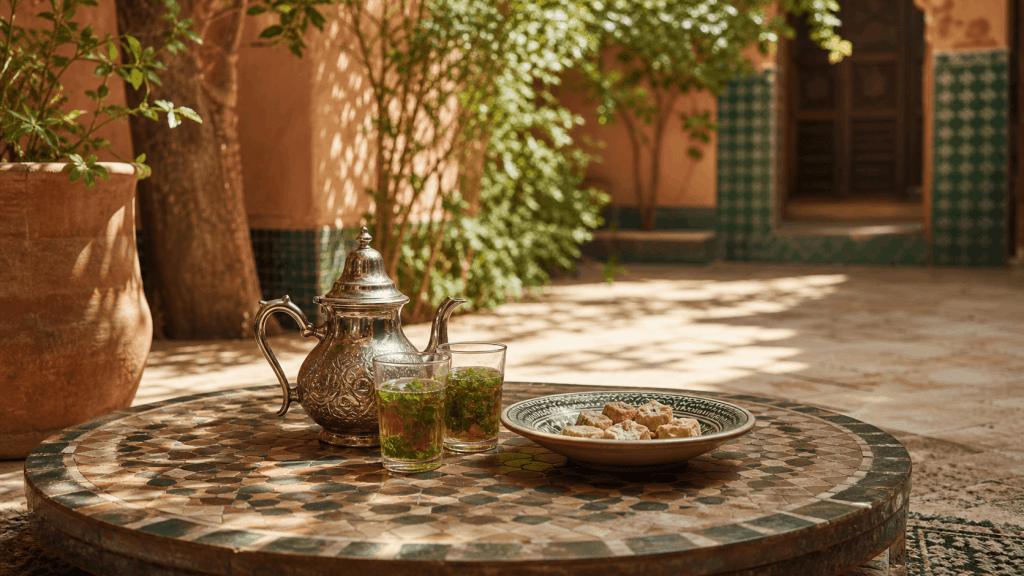
There’s a distinction that explains a lot of this. Some cultures run on clock-time: the hour dictates the activity. The meeting is at 3:00 because it’s 3:00. Other places run more on event-time: the activity is finished when it’s actually finished, and the next thing starts then.
Digital work, by default, is clock-time taken to an extreme. The calendar slices the day into thirty-minute boxes, and you spend the day being shuttled between them whether or not anything in a given box is actually done. You’re never finished — you’re just out of time, and you carry the unfinished thing into the next box.
Working somewhere that leans toward event-time scrambles this in a useful way. You start asking: what would it mean to let a piece of work end when it’s actually done, rather than when the calendar says the slot is over? To not fracture a morning of deep focus into six fragments because six people wanted thirty minutes each?
You can’t fully escape the clock — clients exist, time zones exist, my collaborators in Italy don’t run on Moroccan event-time. But you can decide that not every hour gets chopped into the same size, and that some of them get to belong to one thing until it’s whole.
Presence is a competitive advantage now

Here’s the part that surprised me, because it sounds soft and turns out to be hard-edged.
A screen flattens the world into a single, glowing plane. Everything arrives at the same brightness and the same urgency — the genuinely important thing and the notification about nothing, side by side, equally loud. Spend enough hours there and your attention forgets how to weight things. Everything feels both urgent and slightly unreal.
Sensory life does the opposite. The heat, the noise of a market, the specific bitterness of over-steeped tea, the call to prayer cutting across the afternoon — none of it is flat. It insists on being noticed. It puts you back into a single moment instead of fifteen browser tabs of moments.
I’m not making a wellness point. I’m making a work point. The ability to be fully present with one thing — one problem, one piece of writing, one conversation — is becoming genuinely rare, and rare things are valuable. In a world where everyone’s attention is shattered into fragments, the person who can actually concentrate has an edge that no tool can replicate. Presence isn’t the opposite of a serious digital business. Increasingly it’s the engine of one.
Building a rhythm that respects the life off-screen
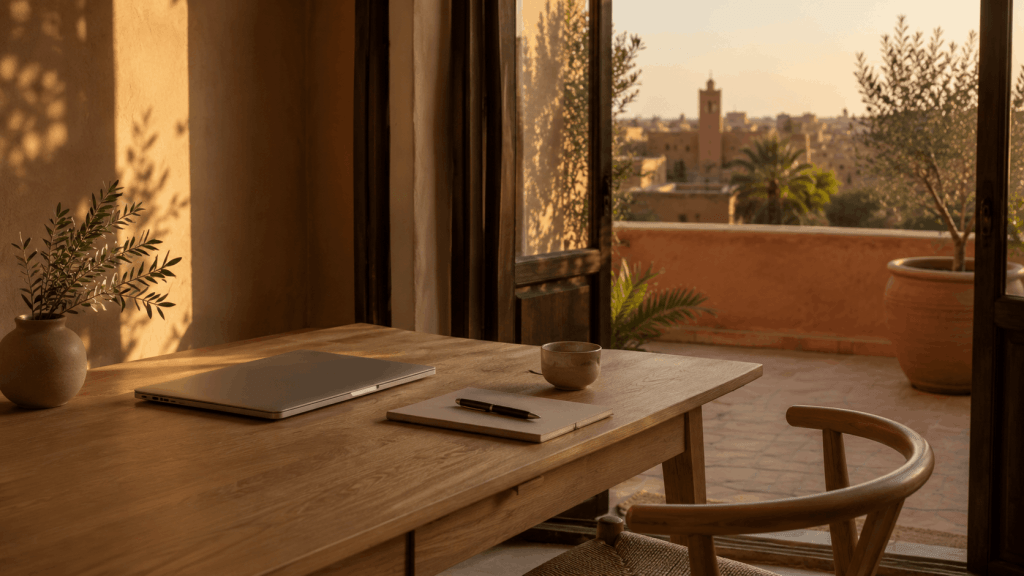
So what do you actually do with this, other than feel briefly enlightened and then go back to the same frantic patterns the moment you fly home?
The mistake would be to think the lesson is “move to Morocco” or “work less.” It isn’t. The lesson is about rhythm — and rhythm travels.
A few things I’m trying to carry back, not as rules but as defaults:
Let the day have a shape with edges, not a continuous smear of availability. A real beginning, real focused stretches, and a real end where the work is actually over and the evening belongs to something else.
Protect one long, uninterrupted block for the work that needs presence, and defend it the way you’d defend a meal with someone you love — by simply not being reachable for that hour.
Build the business so it can survive your slowness. This is where systems and automation quietly do their job: a business held together only by your constant frantic attention can never let you slow down. A business with good machinery underneath can. The calm I felt in Morocco wasn’t only the place. Part of it was knowing the systems back home were still running without me.
That last point is the bridge between everything here. Slowness isn’t only a state of mind you adopt. It’s also something you have to engineer into how the business actually works.
The takeaway
Morocco didn’t teach me a productivity technique. It removed one — the assumption that faster is automatically better, that a hurried life is a serious one, that slowing down is something to feel guilty about.
You don’t need to be here to learn it. But it helps to spend time somewhere that simply doesn’t believe the thing you’ve been told your whole working life: that your worth is measured by your velocity. From the outside, the hurry starts to look like what it mostly is — a costume. And you can take the costume off and still get the real work done.
Slowness as a felt experience is one thing; building it into a business is another. The mechanics are in Slow Productivity in an AI World.


Rispondi